Our Research

Insight and strategies to build an inclusive and sustainable workforce by recognizing the skills and potential of STARs

Barriers and Breakthroughs: Framework to Improve STAR Economic Mobility

Barriers and Breakthroughs: Framework to Improve STAR Economic Mobility

Reach for the STARs: Realizing the Potential of America’s Hidden Talent Pool

Reach for the STARs: Realizing the Potential of America’s Hidden Talent Pool

Navigating with the STARs: Reimagining Equitable Pathways to Mobility

Navigating with the STARs: Reimagining Equitable Pathways to Mobility

Our data on STARs changed the national conversation around workforce.

Opportunity@Work’s analytical and research capabilities inform the nation’s understanding of STARs' potential in the labor market and uncover insights that show how to make positive economic change within regions and industries, and within groups of STARs.

Our research has been featured in:

Thank you! Your submission has been received!
Oops! Something went wrong while submitting the form.
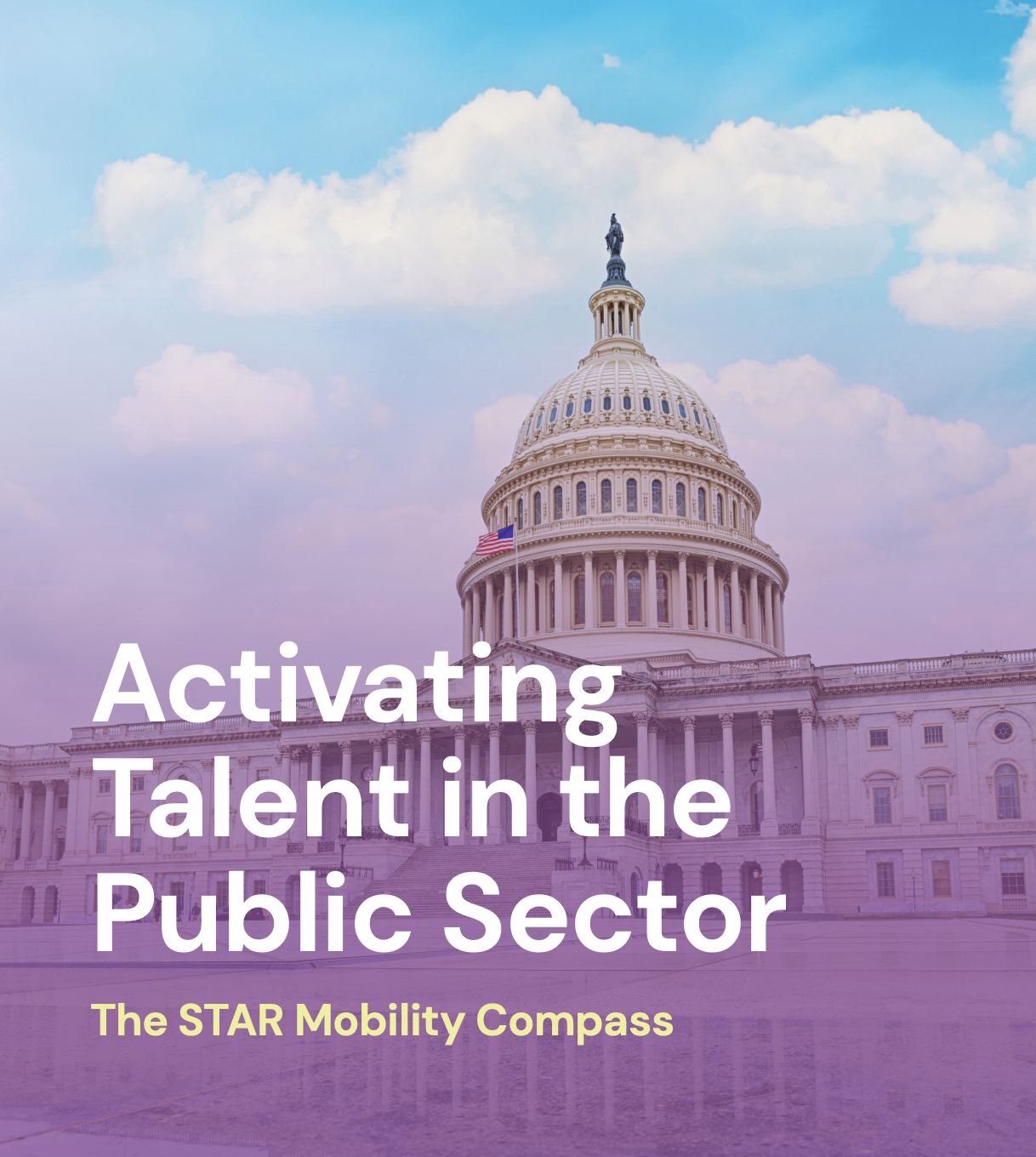
Activating Talent in the Public Sector: The STAR Mobility Compass
Research
Activating Talent in the Public Sector: The STAR Mobility Compass

The STAR Mobility Compass shows that it is possible to make significant improvements to STAR mobility and strengthen hiring pipelines by prioritizing skills in hiring, compensation, and job design.

Up to 30 Million in U.S. Have the Skills to Earn 70% More, Researchers Say (Published 2020)
Article
Up to 30 Million in U.S. Have the Skills to Earn 70% More, Researchers Say (Published 2020)

The findings point to the potential of upward mobility for people without a college degree.

Navigating with the STARs Infographic
Infographic
Navigating with the STARs Infographic

Infographic from our report, Navigate with the STARs: Reimagining Equitable Pathways to Mobility

Navigate with the STARs: Reimagining Equitable Pathways to Mobility
Video
Navigate with the STARs: Reimagining Equitable Pathways to Mobility

Video overview of our report, Navigate with the STARs: Reimagining Equitable Pathways to Mobility.

Rise with the STARs - New Research in New York Times
Blogs
Rise with the STARs - New Research in New York Times

Outstanding analysis in the New York Times by Steve Lohr on Opportunity@Work’s new research quantifies the damage done by two decades of rising career barriers to over 70 million U.S. workers who don’t have bachelor’s degrees.

Scholars Share Insights to Understand Labor Market Mobility for STARs
Blogs
Scholars Share Insights to Understand Labor Market Mobility for STARs

Opportunity@Work organized panel to dive into how skills-based hiring overcomes labor market exclusion at APPAM, the largest conference convening of academics, policy makers, and practitioners.

The Limits of Educational Attainment in Mitigating Occupational Segregation Between Black and White Workers
Paper
The Limits of Educational Attainment in Mitigating Occupational Segregation Between Black and White Workers

This paper introduces a dissimilarity index to measure racial occupational segregation between Black and white workers with and without bachelor’s degrees from 1980 to 2019, and uses a Monte Carlo simulation to compare observed segregation levels to predicted levels under race-neutral conditions.

Occupational Segregation Drives Persistent Inequality, Study Says
Article
Occupational Segregation Drives Persistent Inequality, Study Says

New research points to the limits of education as a path to upward mobility for Black workers.

How About Offering Apprenticeships For People Who Already Work For You?
Article
How About Offering Apprenticeships For People Who Already Work For You?

Apprenticeships leave out the 95M frontline workers who already have jobs, but who still may need additional education to move up in their careers.

The Changing Face of Apprenticeships - Wally Boston
Article
The Changing Face of Apprenticeships - Wally Boston

Opportunity@Work is a proponent of apprenticeships and released a report, with Lightcast, titled The Changing Face of Apprenticeships.

Could one-year apprenticeships become a thing in tech?
Article
Could one-year apprenticeships become a thing in tech?

The hot labor market drove a 41% increase last year in registered apprenticeship programs in tech fields.

The Future Of Postsecondary Education Relies On Changing How We Hire
Article
The Future Of Postsecondary Education Relies On Changing How We Hire

In 2023, America’s workforce stands at a fork in the road.

Millions Have Lost a Step Into the Middle Class, Researchers Say (Published 2022)
Article
Millions Have Lost a Step Into the Middle Class, Researchers Say (Published 2022)

The new figure points to the challenge for the majority of Americans who do not have a four-year college degree.

Reach for the STARs Launch (March 12, 2020)
Video
Reach for the STARs Launch (March 12, 2020)

Hosted by Opportunity@Work’s Byron Auguste and Accenture’s Marty Rodgers, this event dove into the groundbreaking new research that reveals a hidden talent pool of 71 million U.S. workers who do not have four-year degrees — but are STARs and have the potential to thrive in higher-wage jobs.

Who Are STARs?
Blogs
Who Are STARs?

In our inaugural post in the STARlight Blog Series, we made the case for building a STARs-powered economy to help us overcome the COVID crisis. As we move towards recovery, it’s important to understand STARs’ potential to move into better-paying jobs.

We shouldn’t chase economic recovery; we should chase economic redesign
Article
We shouldn’t chase economic recovery; we should chase economic redesign

America needs to think differently about the value of jobs during the coronavirus recovery.

Workers With Skills But No Degree
Article
Workers With Skills But No Degree

Do good jobs exist for those without four-year degrees? A new working paper from the National Bureau of Economic Research sought to answer this question.

Searching for STARs: Work Experience as a Job Market Signal for Workers without Bachelor's Degrees
Paper
Searching for STARs: Work Experience as a Job Market Signal for Workers without Bachelor's Degrees

The demand for a skilled workforce is increasing even faster than the supply of workers with college degrees – the result: rising wage inequality by education levels, and firms facing a skills gap.

The Disparate Racial Impact of Requiring a College Degree
Article
The Disparate Racial Impact of Requiring a College Degree

Among U.S. workers over 25, only 26% of blacks, and 40% of whites, have a bachelor’s or higher.

The Gateway Jobs That Can Open Opportunity For Workers Skilled Through Alternative Routes
Article
The Gateway Jobs That Can Open Opportunity For Workers Skilled Through Alternative Routes

Opportunity@Work discusses the value of certain occupations that have the potential to put STAR (Skilled Through Alternative Routes) workers, currently in low-wage roles, onto a higher-wage career path.

Skills, Degrees and Labor Market Inequality
Paper
Skills, Degrees and Labor Market Inequality

Rather than being unskilled, we argue that these workers are STARs because they are skilled through alternative routes—namely their work experience.

There is no such thing as a low-skilled worker
Article
There is no such thing as a low-skilled worker

Changing the way we think about low-wage work can help give people more economic mobility.

As many as 30 million workers without college degrees have the skills to earn 70% more, report finds
Article
As many as 30 million workers without college degrees have the skills to earn 70% more, report finds

Often, the report claims, employer education requirements hold workers back.

Employers Can Write the Next Chapter In Black History By Extending Opportunity To Black STARs
Blogs
Employers Can Write the Next Chapter In Black History By Extending Opportunity To Black STARs

Our research shows that Black STARs have limited pathways to higher-wage work compared to their white counterparts.

Two Job Families Could Hold the Key to Expanding Pathways for Black STARs
Blogs
Two Job Families Could Hold the Key to Expanding Pathways for Black STARs

A report from Human Resources consulting company Mercer found that across industries in the U.S., Black workers are underrepresented at every career level above support staff when compared to their representation in the general population.

There Are 6 Million Black Workers Missing From Your Talent Pool
Article
There Are 6 Million Black Workers Missing From Your Talent Pool

In addition to the 5.3 million Black workers with college degrees, Opportunity@Work has identified 10 million Black workers who are Skilled Through Alternative Routes, such as associate degrees, credential training programs, on-the-job learning, and self-guided learning at the kitchen table.

IBM, Merck and OneTen launch network to recruit and promote Black workers over the next decade
Article
IBM, Merck and OneTen launch network to recruit and promote Black workers over the next decade

IBM, Merck and OneTen created a network that will help hire and promote 1 million Black workers into higher paying jobs.

About 60 million jobs have been deemed essential during the COVID-19 crisis
Video
About 60 million jobs have been deemed essential during the COVID-19 crisis

Two-thirds of essential workers are STARs. This data story demonstrates their contributions to COVID-19 response and the disparate impacts of the pandemic on women and people of color.

Black STARs Have Always Been Essential, But Will We Recognize It?
Blogs
Black STARs Have Always Been Essential, But Will We Recognize It?

Two-thirds of our 63 million essential workers are Skilled through Alternative Routes (STARs) instead of through a four-year college degree.

STARs have been essential during COVID-19
Article
STARs have been essential during COVID-19

More than half of the nation’s 142 million active workforce are STARs, skilled workers without four-year college degrees.

As Talent Demands Increase, STARs Are The Solution
Article
As Talent Demands Increase, STARs Are The Solution

STARs – workers who are Skilled Through Alternative Routes, other than a bachelor’s degree – are exactly what is needed to build a stronger workforce, and a more inclusive talent ecosystem, for the 21st century.

The majority of Americans lack a college degree. Why do so many employers require one?
Article
The majority of Americans lack a college degree. Why do so many employers require one?

College-degree discrimination has become so widespread that many take it for granted.

Our Heritage is Our Strength: 8 Pieces of Advice for Hispanic STARs
Blogs
Our Heritage is Our Strength: 8 Pieces of Advice for Hispanic STARs

Of the 25.6 million Hispanic workers in the labor force, 54% are STARs. And, while those workers are represented in every occupation, they are overrepresented in lower-wage jobs, earning a median wage of $19.00 an hour. This of course should not be the case.

Getting Hispanic STARs the Skills and Supports they Need to Succeed
Blogs
Getting Hispanic STARs the Skills and Supports they Need to Succeed

Opportunity@Work’s recent study found that Hispanic workers make up a disproportionate number of the workers in the U.S. without college degrees who already have the skills to succeed in high-wage jobs.

Building back better means hiring more workers skilled through alternative routes
Article
Building back better means hiring more workers skilled through alternative routes

The statistics are sobering. About 31 million workers — including millions of Hispanic workers — possess skills that qualify them for higher-paying roles they are never considered for.

The college degree barrier to work
Article
The college degree barrier to work

There are millions of Americans who have the skills to get higher-level, higher-paying jobs but aren't considered for those roles because they don't have college degrees.

Shedding Light on Rural STARs
Research
Shedding Light on Rural STARs

A report from ACT and Opportunity@Work explores the challenges and opportunities facing rural STARs, while also highlighting the potential of leveraging data-driven tools and STAR-centered workforce initiatives to better support a vital yet often overlooked segment of the U.S. workforce.

The Impact of State Actions: States Move the Needle on Skills-Based Hiring
Research
Paper
The Impact of State Actions: States Move the Needle on Skills-Based Hiring

States Move the Needle on Skills-Based Hiring

Barriers and Breakthroughs: Framework to Improve STAR Economic Mobility
Research
Barriers and Breakthroughs: Framework to Improve STAR Economic Mobility

The STAR Barriers and Breakthroughs Framework identifies six key contributors to STAR economic mobility and the many interventions and investments that can support a STAR’s career progression.

Look to the STARs: Activating Talent in a Regional Market
Research
Look to the STARs: Activating Talent in a Regional Market

Employers can find the talent they need, transform their local and regional labor markets, and boost STAR mobility by embracing a collective approach to skills-based job pathways.

Occupational Segregation: Confronting the Labor Market’s Racial Divide
Research
Paper
Occupational Segregation: Confronting the Labor Market’s Racial Divide

Black and white workers with similar levels of education are concentrated in different jobs with negative impacts on wages and mobility.

The Changing Face of Apprenticeships: New Opportunities for Employers and STARs
Research
The Changing Face of Apprenticeships: New Opportunities for Employers and STARs

Research from Lightcast and Opportunity@Work shows how apprenticeships are on the rise as a solution to tear the paper ceiling separating employers and the talent they need.

STARs in the Workplace: How a Gap in Talent Development Hurts Employers and STARs
Research
STARs in the Workplace: How a Gap in Talent Development Hurts Employers and STARs

Workers Skilled Through Alternative Routes (STARs) other than a bachelor’s degree demonstrate valuable skills on the job, but the vast majority don’t get the opportunities to develop their full potential. Why not?

Rise with the STARs: Building a stronger labor market for STARs, communities, and employers
Research
Rise with the STARs: Building a stronger labor market for STARs, communities, and employers

Our report, Rise with the STARs: Building a Stronger Labor Market for STARs, Communities, and Employers, shows the impact of degree discrimination on employers and STARs and identifies a better path forward for everyone.

Reach for the STARs: Realizing the Potential of America’s Hidden Talent Pool
Research
Reach for the STARs: Realizing the Potential of America’s Hidden Talent Pool

There is a vast overlooked talent pool of 70+ million workers who are Skilled Through Alternative Routes (STARs). These are workers who have a high school diploma or equivalent and do not have a four-year college degree but do have the skills to perform higher-wage work today.

Navigating with the STARs: Reimagining Equitable Pathways to Mobility
Research
Navigating with the STARs: Reimagining Equitable Pathways to Mobility

The COVID-19 crisis lays bare the deficiencies in our labor market. STARs comprise two thirds of our essential workforce and yet they continue to experience the decades-long trends in wage decline and limited upward mobility. We must reimagine our approach to our workforce to achieve an equitable recovery.

Black STARs: Spotlight on Black STARs: Insights for Employers to Access the Skilled and Diverse Talent They’ve Been Missing
Research
Black STARs: Spotlight on Black STARs: Insights for Employers to Access the Skilled and Diverse Talent They’ve Been Missing

There are more than 70 million STARs–workers who are Skilled Through Alternative Routes, rather than through a bachelor’s degree–in the American workforce. They include millions of Black STARs who have the skills employers seek to fill in-demand jobs, and yet these workers are missing from traditional talent pipelines.

Essential STARs: Across Most Essential Roles, STARs Are The Majority
Research
Essential STARs: Across Most Essential Roles, STARs Are The Majority

Two-thirds of essential workers are Skilled Through Alternative Routes. As we work to recover, the rich, untapped talent pool of STARs' skills is critical — and essential.

Hispanic STARs: Smart Employers Aim for Hispanic STARs
Research
Hispanic STARs: Smart Employers Aim for Hispanic STARs

Hispanics represent almost one in five workers in the workforce and they are overrepresented in lower-wage occupations. A majority of Hispanic workers are STARs: they are Skilled Through Alternative Routes such as community colleges, apprenticeships, and on-the-job learning. Efforts to expand job pathways for STARs will increase economic mobility for Hispanic workers.

STAR Research Community

Activating a collaborative community of researchers

We conduct our own research, but that’s only the beginning. We also seek out and encourage the participation of research partners and collaborators.

Our goal? To inspire others to pursue new research—and question conventional wisdom on our workers, talent management practices, and workforce development. Over time, the available data and insights will multiply, delivering answers to every question that’s at the heart of economic mobility for STARs.

Visit the Research Community

Our Research Partners

STARs Insights Advisory Panel

Our STARs Insights Initiative Advisory Panel is chaired by Dr. Erica Groshen, former Commissioner of the Bureau of Labor Statistics, and includes advisors with experience in labor economics, workforce development and the future of work across the public, private, and academic sectors.

Erica Groshen

Erica Groshen

Former Commissioner, Bureau of Labor Statistics

Peter Q. Blair

Peter Q. Blair

Assistant Professor, Harvard University

STAR Stories

Read about the barriers, challenges, and possibilities that STARs are seeing today — and why they're hopeful for a brighter future.

Read STAR Stories

Join Our Newsletter

Sign up for exclusive insights, industry news, upcoming webinars, and events.

Submit
Thank you for signing up! Your submission has been received!
Oops! Something went wrong while submitting the form.