Reach for the STARs
Skills and Economic Mobility in the AI Economy
More than 75 million STARs bring valuable skills to the labor market. An AI transformation that works for everyone will put those capabilities at the center of how employers hire, promote, develop, and retain workers.
.png)
Who are STARs?
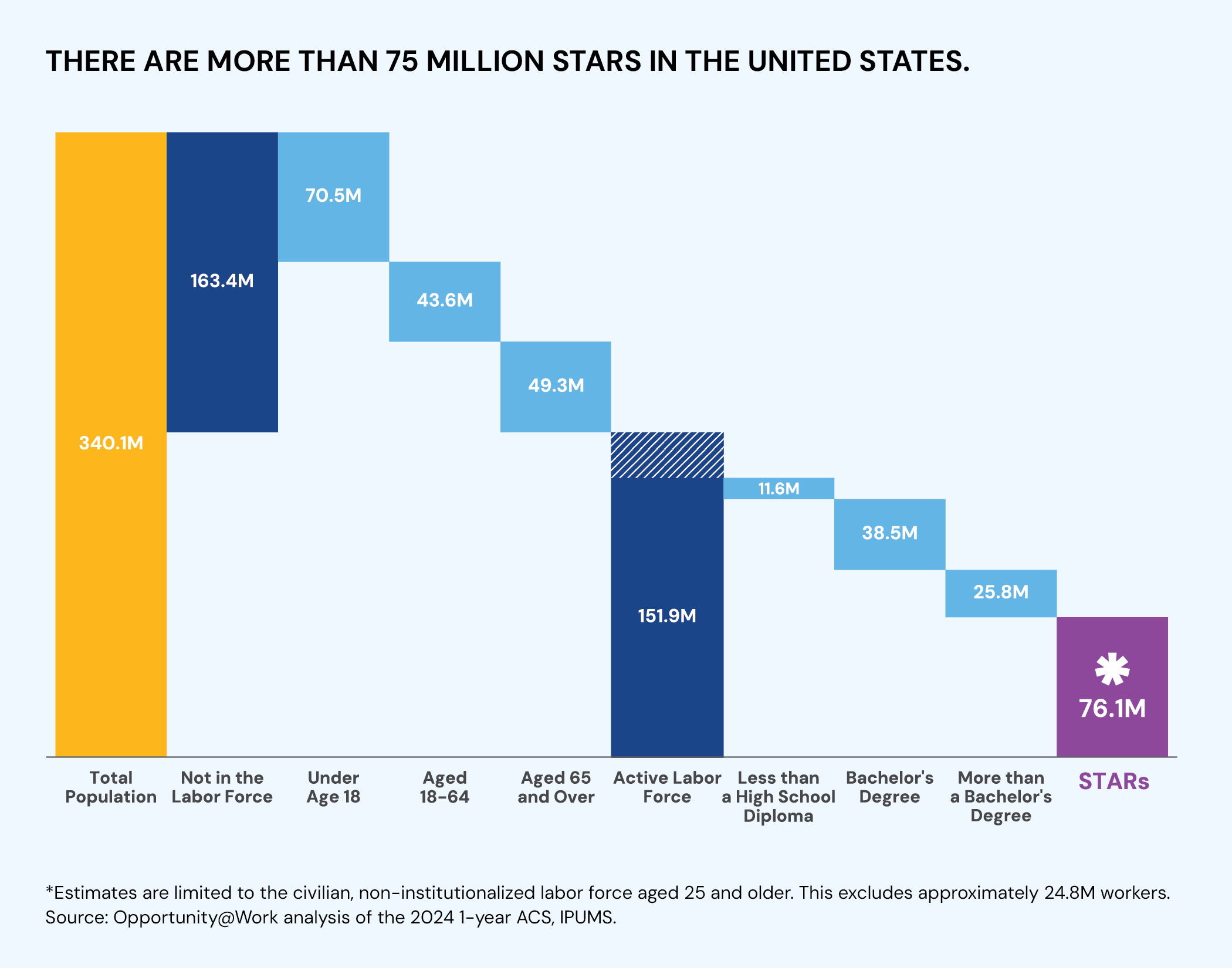
STARs are 25 years or older, have a high school diploma or its equivalent, and have built skills outside of a four-year bachelor’s degree. STARs build valuable, transferable skills through military service, community college, partial college completion, certificate programs and bootcamps, apprenticeships, on-the-job experience, and other alternative routes.
Three core insights relevant to this moment:
INSIGHT 01.
STARs make up half of the U.S. workforce and are represented across every part of the economy.
INSIGHT 02.
STARs’ skills have real value in the labor market.
INSIGHT 03.
STARs are ready for higher-wage work.
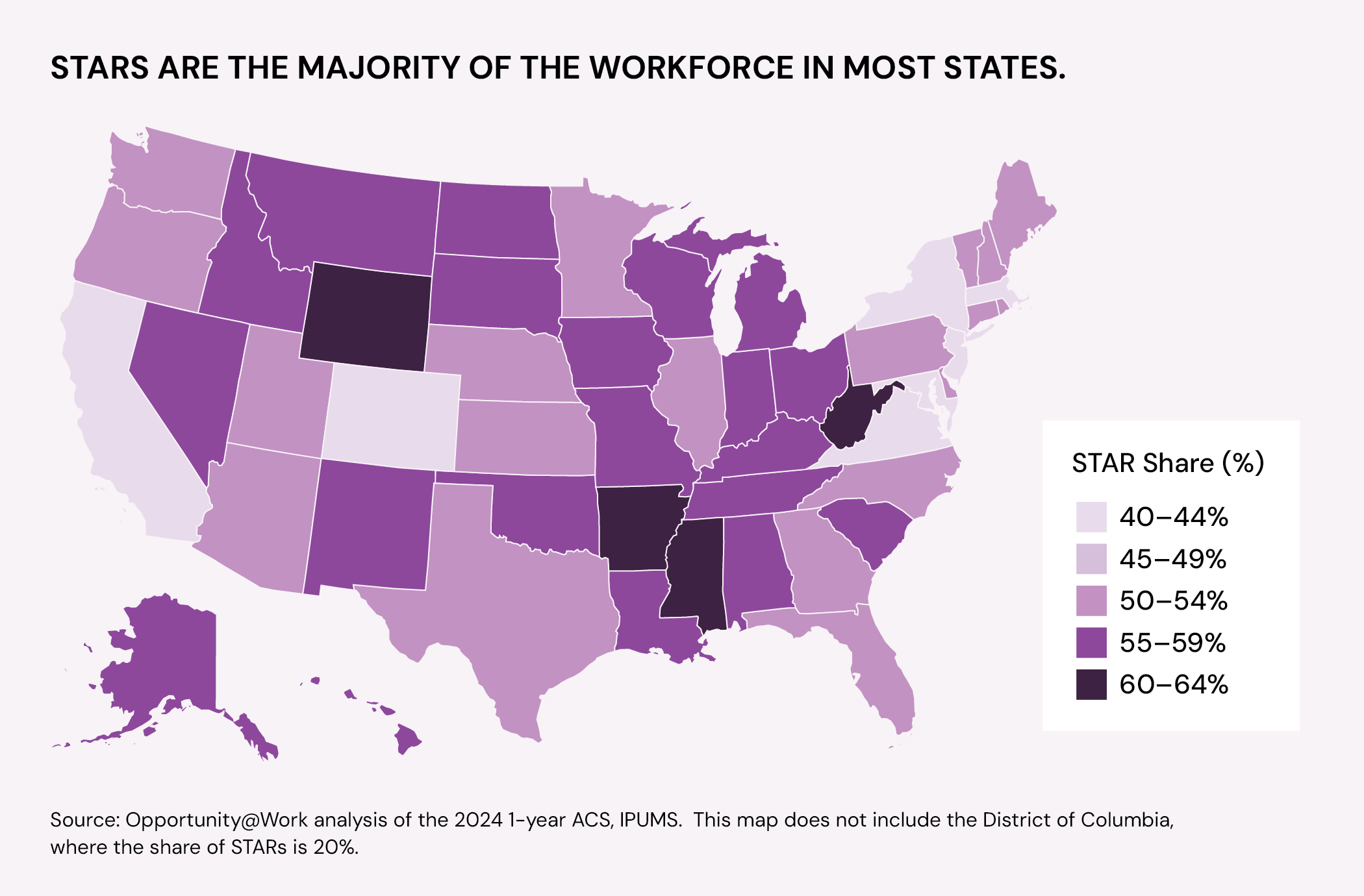
Of the 151.9 million workers in the U.S. age 25 and older, over 75 million, or 50%, are STARs. They are the majority of the workforce in most states, represented across every region of the U.S. labor market and across race, ethnicity, gender, generation, and life experience.
GEOGRAPHIC
GENDER
RACE & ETHNICITY
VETERANS
KEY TAKEAWAY
An AI transformation that leaves the paper ceiling intact leaves half the workforce behind.
AI is reshaping which skills employers value, how workers are hired, and which jobs exist at all. Left unaddressed, the forces behind the paper ceiling will remain, and could even get worse. But we can also use AI to create new tools to recognize, validate, and build skills — surfacing capabilities that credential-based systems have long overlooked.

What is the paper ceiling?
The paper ceiling is the invisible barrier that keeps STARs out of higher-wage work, no matter their skills or experience. It shows up as degree screens in job postings, credential-reliant hiring and promotion, and workforce systems built around degrees instead of skills. Over time, it locks STARs out of the professional networks and advancement pathways that degree holders take for granted.
INSIGHT 02.
STARs’ skills have real value in the labor market.
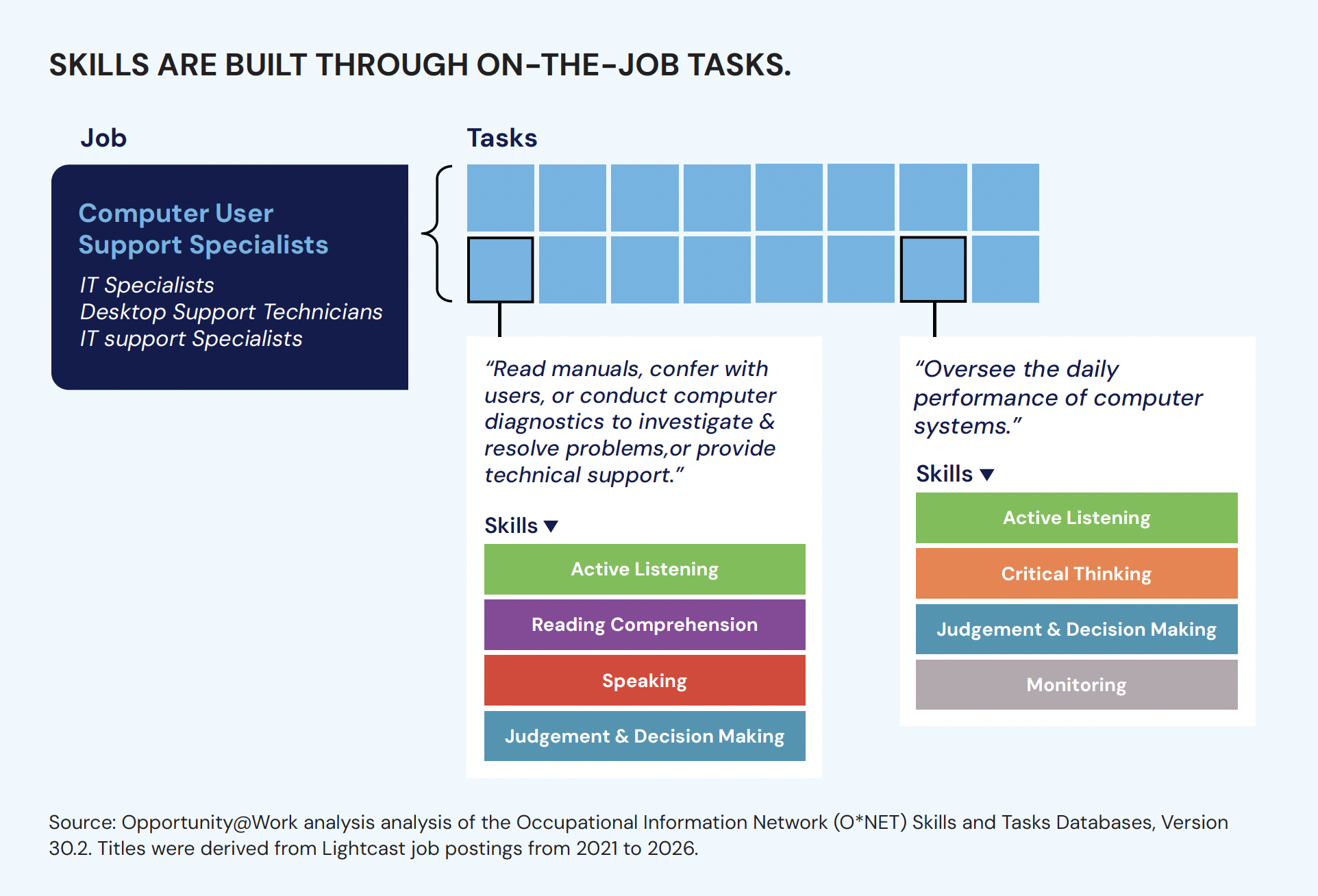
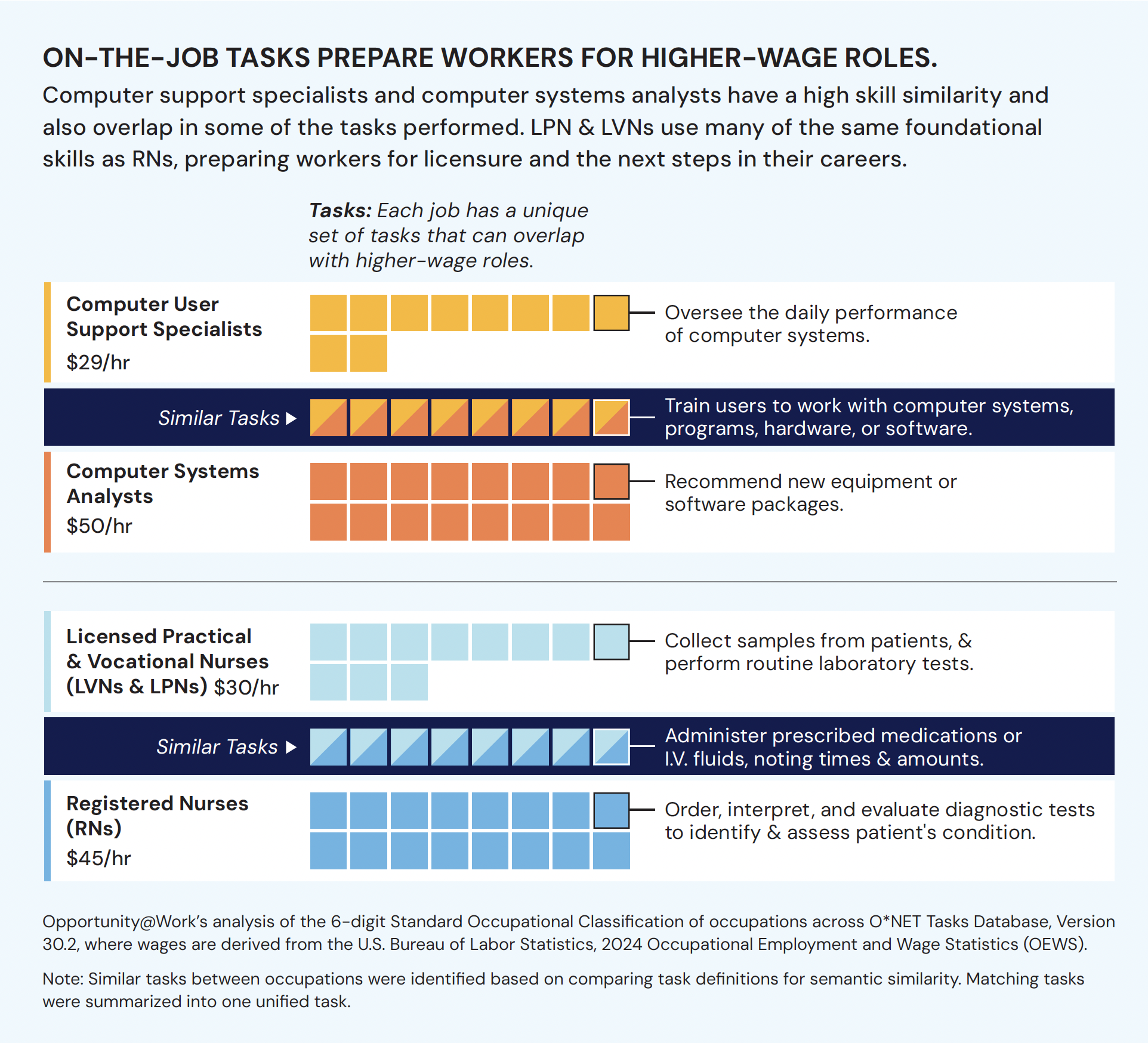
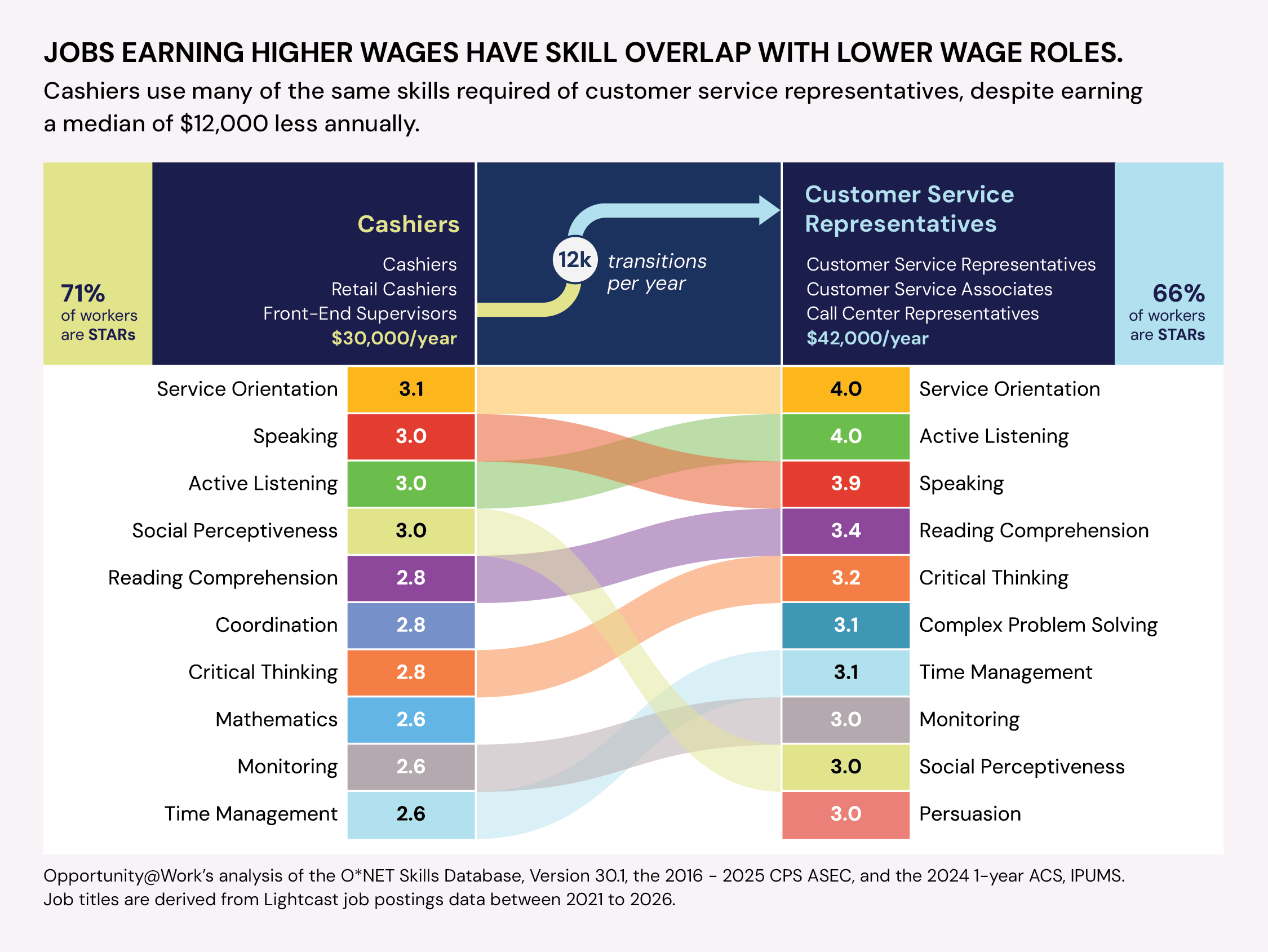
Studying more than 190 million job transitions over the past decade, the research found a clear pattern: as skill similarity between two jobs increases, the number of workers making that transition increases as well. Strong career pathways are rooted in the skills demonstrated on the job. This is particularly important for STARs, where on-the-job learning is one of the primary ways they build employer-recognized skills that lead to greater economic mobility.
KEY TAKEAWAY
AI is changing how workers’ skills are built and deployed.
A healthy AI transformation must strengthen skills-first pathways. As AI changes how tasks get done and which ones are automated, jobs will change, and so will the pathways connecting them. AI can enable workers to acquire new skills, expertise, and experience through good job design and redesign, which can both grow existing job pathways and unlock new ones.
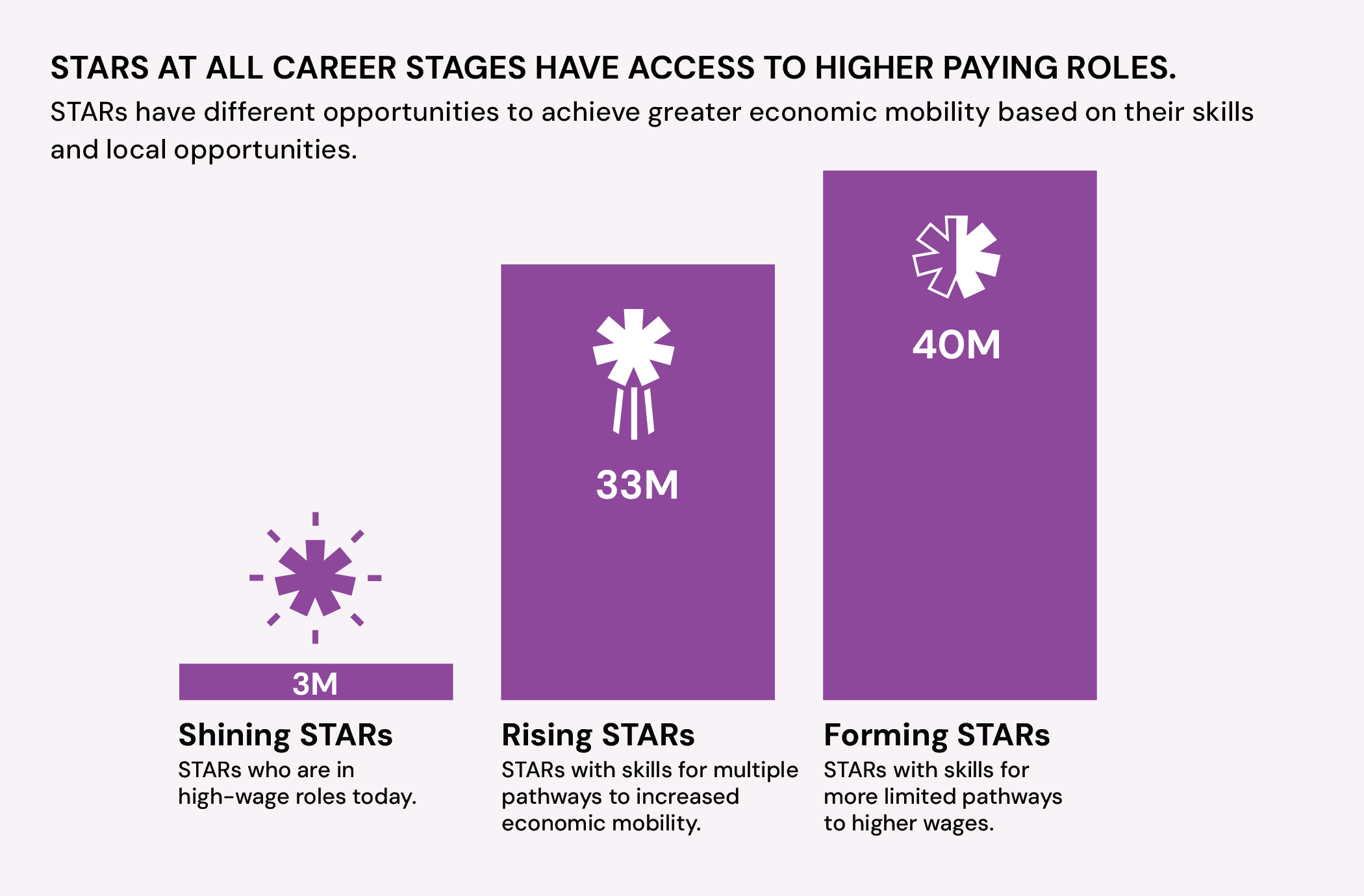
STARs are on different trajectories to higher wages and require different interventions to get there. Some are already earning high wages. Others are one or two job transitions away. And millions more are building the foundational skills that will get them there. The research measures the real pathways to higher-wage work that sit in front of STARs today, given their occupation, state, and age — creating three STAR groups: Shining, Rising, and Forming.
Shining STARs are already in high-wage roles
Shining STARs prove what is possible. They have found ways in their careers to tear the paper ceiling at work, succeeding in roles where so many employers "require" a bachelor's degree to recognize talent. Others, facing barriers to advancement, forged their own paths and started their own businesses, making "CEO" their most common job title.
3 million
Shining STARs, earning a median of $120,000 a year
"I had tried for many years to get jobs in the tech sector, only to be told that I could not get a job because I did not finish the degree. I was never tested on my technical skills."Read their full STAR story →
Rising STARs are ready for higher wage work today
Rising STARs have the skills for jobs that pay 75% more than they currently earn, but are most directly held back by the paper ceiling, which puts so many destination jobs off-limits to them. Rising STARs represent a talent pool that could ease employers’ skill gaps and revitalize talent pipelines if our labor market accounted better for skills.
33 million
Rising STARs have multiple, demand-backed pathways to higher-wage jobs
"Some of the biggest growth happens when you take a chance on yourself before you feel completely ready."Read their full STAR story →
Forming STARs are building the skills for higher wages, but they need better pathways to get there.
Forming STARs work in jobs with two or fewer opportunities that lead to higher-wage work. This is not purely a skills problem. They display valuable skills on the job like communication, listening, and decision-making. But the pathways to the next job are difficult to navigate.
40 million
Forming STARs have the skills for more limited pathways to increased economic mobility
"You created a path when none was provided for you, and that mutability and problem solving is your superpower."Read their full STAR story →
KEY TAKEAWAY
AI can reshape pathways for greater economic mobility.
The deepest risk is that AI’s disruption may land hardest on the workers least able to withstand it. More than 30% of Rising and Forming STARs have limited means to weather involuntary job loss. None of this is predetermined. The same forces that could sever pathways to greater mobility could just as easily strengthen them. What matters are the choices we make about how this technology is built and used.
KEY SUMMARY
An AI transformation demands a skills-first ecosystem.
STARs' skills already carry real value, driving upward transitions into higher-paying work. More than 75 million workers, half the labor force, are STARs, and millions are positioned for higher wages today if the pathways exist to get them there.
AI raises the stakes. It is redrawing jobs at the task level, changing entire job pathways in ways we cannot fully predict. In some cases, AI absorbs the rote work inside a job, freeing a nurse practitioner to spend more time on diagnosis and direct care. In others, AI takes on more of the substantive work itself, leaving a financial analyst or sales representative to review and refine rather than originate. Either way, the tasks that make up a job are shifting, and so are the pathways workers use to enter, grow, and advance. While we cannot predict all of these shifts, we can build the talent systems that let us adapt as they happen with a skills-first labor market.
A skills-first labor market is bigger than any one employer’s practices. It is an ecosystem: employers who hire, develop, and promote based on skills; training providers and schools that teach and validate the skills the labor market actually needs; public and corporate policies that prioritize skills; and the technology and data infrastructure — increasingly AI-powered — that makes skills visible and portable across all of them.
Skills-first practices have already begun to expand access for STARs and strengthen talent pipelines, but sustaining that progress depends on deliberate choices: defining and validating skills consistently across employers and training providers, keeping skills data usable across systems rather than locked inside any one company’s systems, and designing and governing the AI tools now built into hiring and mobility so they surface skills rather than reintroduce degree and pedigree filters at scale. The workforce agility the AI era demands, and the pathways that let millions of STARs move into higher-wage work, both depend on a genuine, consistent focus on skills across the whole ecosystem.

How the ecosystem can build a skills-first labor market for STARs
For employers, educators, training providers, and HR technology companies:
Make skills visible and support better career navigation
Help workers understand the skills they’ve built and where they can take them. You can:
- Make skills visible, verifiable, and portable
- Help workers navigate changing pathways
- Remove barriers to learning and advancement
For employers, training providers, education institutions, and policymakers:
Partner across the ecosystem to build skills
Work together to build skills at the pace AI demands. You can:
- Make learning continuous and connected to work
- Recognize employers as active developers of talent
- Align training and public investment with mobility
For policymakers, HR tech, and workforce intermediaries & funders:
Build the infrastructure and policy that connect the ecosystem
Coordinate the systems that make skills visible across the labor market. You can:
- Build shared skills infrastructure and better labor-market information
- Put investment in workers on equal footing with investment in technology
- Coordinate regional talent strategies
Frequently Asked Questions
Get the full report
Reach for the STARs: Skills and Economic Mobility in the AI Economy breaks down how AI is reshaping the pathways 75+ million STARs rely on, and what employers, training providers, and policymakers can do about it.
Reach for the STARs 2026: Skills and Economic Mobility in the AI Economy.
Published by Opportunity@Work, 2026.